

Many owners ask, “Why does my dog lick my face?” The answer usually involves communication, taste, instinct, and learned behavior. Timing and body language reveal whether the licking is friendly, anxious, or attention-seeking.
| What may be happening | Clues you might notice | What it can mean |
|---|---|---|
| Friendly greeting | Loose body, soft eyes, wagging tail | Social connection or affection |
| Interesting taste | Licking after meals or exercise | Salt, food residue, or scents |
| Attention-seeking | Licking followed by pawing or staring | Your dog wants interaction |
| Appeasement | Head turning, lowered posture, tense movements | Your dog may want space |
| Stress relief | Repetitive licking during tense situations | Self-soothing behavior |
| Grooming | Calm, gentle licking | Social grooming or learned habit |
| Routine or hunger | Licking near meals or morning wake-up | A learned request for something |
Direct answer: Dogs lick faces for several reasons, including affection, social greeting, attention, taste, grooming, and stress relief. The meaning depends on timing and body language. A relaxed dog may be greeting you, while repeated licking with tense posture can signal discomfort. Sudden or excessive licking deserves closer attention.
Key takeaways
- Face licking can show affection, but affection is not the only explanation.
- Dogs may enjoy salt, food smells, skin oils, and other scents on your face.
- Your reaction can accidentally teach your dog that licking earns attention.
- Tense body language can turn an apparent “kiss” into an appeasement signal.
- U.S. health guidance recommends keeping dog saliva away from faces and broken skin.
- Sudden or compulsive licking can justify a veterinary check.
Why Does My Dog Lick My Face? Seven Common Reasons
Face licking is a normal part of canine communication in many situations. No single explanation fits every dog or every interaction. Watch what happens before, during, and after the licking for better clues.
1. Your dog may be giving you a friendly greeting
Dogs use licking during social interactions with other dogs and people. A relaxed greeting can become associated with affection and security. Your response may strengthen that habit over time.
Look at the rest of your dog’s body before calling every lick a kiss. Soft eyes and relaxed muscles support a friendly interpretation. Comfortable posture matters more than the lick alone.
2. Your face smells and tastes interesting
Human skin carries sweat, oils, food traces, and many other scents. Dogs gather information through smell and taste, so faces are especially interesting to them. Salty skin can also encourage repeated licking.
You may notice more licking after eating or exercising. Your lips can carry food smells after meals. Sweat can also leave salt on your forehead and cheeks.
3. Licking gets your attention
Dogs learn quickly which behaviors produce a response. Laughing, talking, petting, or pushing them away still gives them attention. That response can make face licking happen more often.
This pattern can become especially clear during quiet moments. Your dog licks, and you immediately interact. From your dog’s perspective, the behavior worked.
4. Your dog may be showing appeasement
Licking does not always mean your dog wants closer contact. Some dogs use face licking during uncomfortable social situations. They may combine it with other signals asking for space.
Watch for head turning, tucked posture, tense muscles, or avoidance. Those signals deserve more weight than the lick itself. Give your dog room instead of encouraging more contact.
5. Licking can become a stress-relief behavior
Repetitive licking can help some dogs cope with excitement or stress. The behavior may appear during unfamiliar visits, handling, or other tense situations. Frequency and context help separate casual licking from a coping habit.
Stress-related licking often appears with other behavior changes. You might notice restlessness, avoidance, pacing, or difficulty settling. Persistent changes deserve closer attention, not punishment.
6. The behavior begins early in life
Puppies encounter licking during early care and communication with their mothers. Young canids also lick their muzzles during food-related interactions. Those early patterns can later appear in social greetings.
Domestic dogs do not need one fixed reason to keep the behavior. Social habits can change through experience and reinforcement. Your household routine can shape when licking happens most often.
7. Your dog may want food or another routine activity
A lick before breakfast may be less mysterious than it appears. Your dog can learn that licking wakes you or starts the morning routine. The same pattern can develop before walks, play, or dinner.
Notice what usually happens immediately afterward. Repeated sequences often reveal the reward maintaining the behavior. Changing that sequence can reduce unwanted licking without creating conflict.
How to Read What Your Dog’s Licking Means
The lick itself gives only part of the message. Body posture, timing, and repetition provide stronger context. Use all three before deciding what your dog wants.
| Clue | More consistent with relaxed licking | More concerning pattern |
|---|---|---|
| Body | Loose and comfortable | Stiff, tucked, or leaning away |
| Eyes | Soft, normal gaze | Wide eyes or repeated avoidance |
| Timing | Greeting or calm interaction | Handling or stressful situations |
| Frequency | Brief and easy to interrupt | Repetitive or difficult to stop |
| Afterward | Dog settles normally | Dog remains restless or distressed |
A simple three-clue check can make the behavior easier to interpret:
- Check the moment. Ask what happened immediately before the licking.
- Check the body. Look at posture, eyes, ears, tail, and movement.
- Check the pattern. Notice whether the behavior is occasional, increasing, or compulsive.
These clues are more useful together than alone. A quick morning lick and frantic repeated licking are different situations. Keeping that distinction prevents affection from becoming the automatic explanation.
Is It Safe to Let a Dog Lick Your Face?
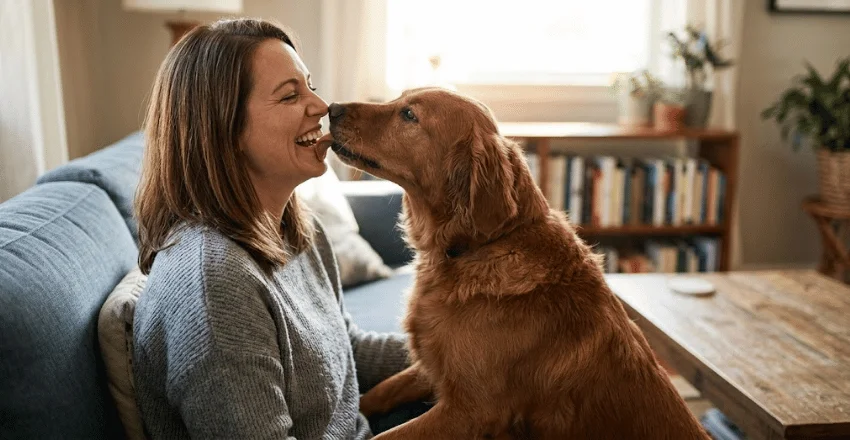
Dog saliva can contain germs, even when the animal looks healthy. The CDC advises against letting dogs lick around your mouth and face. It also recommends keeping saliva away from open wounds and broken skin.
One concern is Capnocytophaga, a bacterium commonly found in dog and cat mouths. Infection is rare, but saliva entering wounds can create risk. People with weakened immune systems face a higher risk of serious illness.
Healthy skin provides more protection than your eyes, mouth, or damaged skin. Washing after unwanted licking is a sensible hygiene step. People with health concerns should follow their healthcare professional’s advice.
Children also need close supervision around dogs. Face-to-face contact can create hygiene concerns and reduce reaction time if a dog becomes uncomfortable. The CDC recommends supervising young children around dogs, including trusted family pets.
When Face Licking Deserves More Attention
A familiar licking habit is usually less concerning than a sudden change in behavior. Contact your veterinarian if licking becomes intense, compulsive, or difficult to interrupt. Medical problems, discomfort, stress, or anxiety can sometimes affect licking behavior.
Watch for other changes involving appetite, energy, sleep, or self-licking. Those signs can give your veterinarian useful context. Hearvise also explains why annual exams for cats and dogs can help identify health changes early.
Ongoing medical conditions can also change behavior or daily comfort. Keep your veterinarian informed when a new behavior appears alongside existing symptoms. Hearvise’s guide to managing chronic conditions through veterinary care offers related preventive-care guidance.
Urgent symptoms require faster action than a simple behavior question. Breathing trouble, collapse, poisoning concerns, or serious injuries need immediate veterinary attention. Hearvise’s article about veterinary hospitals and emergency care explains the role of emergency facilities.
How to Reduce Face Licking Without Punishment
You do not need to punish normal licking to set a boundary. Clear redirection works better when everyone responds consistently. Rewarding an alternative behavior gives your dog another way to interact.
- Turn your face away calmly. Avoid dramatic reactions that may provide extra attention.
- Ask for another behavior. A sit, down, or place cue can interrupt the pattern.
- Reward the alternative. Praise or reward the calmer behavior.
- Stay consistent. Different household reactions can reinforce the licking habit.
- Address stress. Reduce avoidable triggers when licking appears during uncomfortable situations.
Consistency matters because learned behavior depends on consequences. If licking sometimes earns attention, your dog may continue trying it. Calm repetition makes the new boundary easier to understand.
Training works best within a wider health and enrichment routine. Exercise, predictable schedules, and appropriate activities can support calmer daily behavior. Hearvise’s lifelong pet wellness plan covers preventive care across a pet’s life.
Frequently Asked Questions
Why does my dog lick my face in the morning?
Morning licking can combine greeting, routine, scent, and attention-seeking. Your dog may have learned that licking makes you wake up. Breakfast, walks, or play can then reinforce that pattern.
Why does my dog lick my face when I cry?
Your tears change the smells and tastes available on your face. Your dog may investigate those changes or respond to your altered behavior. The licking can reflect curiosity, social contact, or self-soothing.
Why does my dog lick my face and ears?
Faces and ears carry strong scents, skin oils, and other sensory information. Dogs may also include these areas during social grooming. Your attention can strengthen the habit once it begins.
Does a dog licking you always mean affection?
No single meaning applies to every lick. Affection is possible, but taste, attention, appeasement, stress, or habit can produce similar behavior. Read the dog’s posture and situation before deciding what the lick means.
Should I stop my dog from licking my face?
Setting a no-face-licking rule is reasonable, especially for hygiene. U.S. CDC guidance advises preventing dogs from licking around the face and mouth. Calm redirection can enforce that boundary without punishing normal canine communication.
The Bottom Line
Most face licking reflects normal canine behavior, but the reason can change from moment to moment. Context helps separate affection from attention-seeking, stress, taste, or appeasement. Watch for sudden changes and involve your veterinarian when the pattern becomes unusual.
If you dislike face licking, you can set a clear boundary without damaging your bond. Redirect the behavior and reward a calmer alternative instead. Your dog’s body language should guide your response.