
Introduction
Choosing eyeglasses for men involves more than picking a frame that looks attractive. The right pair should complement your face shape, fit comfortably, suit your lifestyle, and support your vision needs. Understanding frame designs, materials, measurements, and lens options makes shopping easier. This guide explains what to consider before buying your next pair. Quick answer: Choose frames that balance your face shape, match your personal style, and fit comfortably across your nose and temples. Compare materials such as acetate, metal, and titanium before deciding. Select lenses based on your prescription, daily activities, and vision requirements. Always confirm your prescription before ordering.
Quick Guide to Choosing Men’s Eyeglasses
| Buying consideration | What to look for |
|---|---|
| Face shape | Frames that balance your natural facial proportions |
| Frame style | Rectangle, round, aviator, browline, wayfarer-style, or rimless |
| Frame material | Acetate, metal, titanium, or TR-90/nylon |
| Frame width | A front that sits comfortably without pinching or extending excessively |
| Bridge fit | Secure positioning without slipping or pressure |
| Temple length | Arms that reach comfortably behind your ears |
| Frame color | Shades that complement your skin tone and hair |
| Lens selection | Coatings and materials suited to your prescription and activities |
| Prescription | A current prescription from a qualified eye care professional |
How to Choose Eyeglasses for Men by Face Shape
Your face shape provides a useful starting point when comparing frame designs. The goal is to create visual balance rather than follow strict fashion rules. Try different shapes because facial proportions and personal preferences vary.
| Face shape | Common characteristics | Frame styles to consider | Styling purpose |
|---|---|---|---|
| Round | Similar face width and length, with softer curves | Rectangle, square, browline | Adds definition and angular contrast |
| Square | Broad forehead, strong jaw, angular features | Round, oval, aviator | Softens prominent angles |
| Oval | Balanced proportions, slightly narrower chin | Rectangle, round, wayfarer-style | Accommodates many frame designs |
| Heart | Broad forehead and cheekbones, narrower chin | Round, oval, rimless | Creates a lighter appearance around the forehead |
| Triangle | Narrower forehead and wider jaw | Browline, aviator, upper-accented frames | Adds visual emphasis near the upper face |
| Oblong | Longer face with relatively straight sides | Deep rectangular, wayfarer-style, browline | Adds visual width and reduces the appearance of length |
Round Faces
Round faces generally have soft curves and similar width and length measurements. Angular frames create contrast and add definition to these proportions. Rectangular and square designs are useful starting points. Avoid choosing frames that closely repeat your face’s rounded outline if you want stronger contrast.
Square Faces
Square faces typically feature a defined jawline and broad forehead. Round and oval frames introduce softer curves that balance these angular features. Aviator designs can also complement a strong jaw. Consider thinner rims if you prefer a less pronounced appearance.
Oval Faces
Oval faces have balanced proportions and gently curved features. Most frame shapes can work, including rectangular, round, and wayfarer-style designs. Pay attention to frame width rather than choosing oversized styles automatically. Frames should complement your cheekbones without extending too far beyond your face.
Heart-Shaped and Triangle Faces
Heart-shaped faces are wider around the forehead and narrower toward the chin. Lightweight oval, round, and rimless designs can balance the upper face. Triangle-shaped faces have the opposite proportions, with greater width around the jaw. Browline and aviator frames can add emphasis around the upper portion of the face.
Oblong Faces
Oblong faces are longer than they are wide, often with straighter cheek lines. Frames with greater lens depth can create more balanced proportions. Browline and wayfarer-style designs are worth trying. Avoid unusually narrow frames if they make your face appear longer.
Popular Frame Styles for Men
Frame shape affects the overall appearance of your glasses. Consider where you plan to wear them and how much visual attention you want your frames to receive.
| Frame style | Main characteristics | Suitable appearance |
|---|---|---|
| Rectangle | Horizontal shape with defined corners | Professional and understated |
| Round | Circular or softly curved lenses | Creative, vintage, and relaxed |
| Aviator | Teardrop lenses with a distinctive upper bridge | Classic and expressive |
| Browline/Clubmaster | Strong upper rim and lighter lower section | Structured and retro-inspired |
| Wayfarer-style | Bold front with gently angled upper corners | Versatile and casual |
| Rimless | Lenses attached without a surrounding rim | Minimal and lightweight-looking |
| Semi-rimless | Partial frame surrounding each lens | Subtle and contemporary |
Rectangle frames are a practical choice for everyday wear. Their clean lines work well with casual clothing and business outfits. They can also provide useful contrast for round facial features. Round frames create a softer, distinctive appearance. They suit people who prefer vintage-inspired or creative styling. Thin metal versions provide a restrained look, while thicker acetate versions attract more attention. Aviator frames feature a recognizable shape with a double bridge on many designs. They can complement square faces and add character to simple outfits. Choose lens proportions that suit your facial width. Browline and Clubmaster frames emphasize the upper portion of the frame. They create a structured appearance around the eyebrows. These designs work well for people who enjoy classic styling. Wayfarer-style frames have a substantial front and slightly angled shape. They offer a practical balance between casual and smart-casual clothing. Their proportions can also suit several face shapes. Rimless and semi-rimless frames offer less visual emphasis than thick full-rim designs. They can suit people who prefer understated eyewear. Ask an optician whether your prescription and chosen lens material are suitable for the frame construction.
Eyeglass Frame Materials: What Should You Choose?
Frame material affects weight, flexibility, appearance, and everyday durability. Your choice should reflect comfort, skin sensitivity, and how frequently you wear your glasses.
| Material | Main advantages | Things to consider |
|---|---|---|
| Acetate | Color variety, patterns, and substantial styling | Can feel heavier than thin metal designs |
| Metal | Slim appearance and adjustable nose pads on many designs | Some alloys may contain metals that irritate sensitive skin |
| Titanium | Lightweight, strong, and corrosion-resistant | May offer fewer color and styling variations |
| TR-90/nylon | Lightweight and flexible construction | Frame flexibility and finish vary by product |
Acetate
Acetate frames are popular for their range of colors, patterns, and shapes. They can create a bold appearance without requiring decorative metal details. Thicker acetate frames may feel heavier than lightweight alternatives.
Metal
Metal frames offer a clean and often understated appearance. Many designs include adjustable nose pads that help achieve a comfortable fit. Check the frame’s alloy composition if you have known metal sensitivities.
Titanium
Titanium is valued for its lightweight construction, strength, and corrosion resistance. It can be suitable for people who wear glasses throughout the day. Its relatively light feel may help reduce pressure on the nose.
TR-90 and Nylon
TR-90 and other nylon-based materials are used in flexible, lightweight frames. They can suit active routines and casual everyday use. Check the manufacturer’s specifications because flexibility and impact resistance differ between materials.
How to Get the Right Frame Fit
A stylish frame can still feel uncomfortable when its measurements do not match your face. Check the width, bridge, and temple length before buying. These measurements also help when comparing frames online.
Frame Width
The frame front should align reasonably well with the sides of your face. Frames that are too narrow can press against your temples. Frames that are too wide may slide or look disproportionate.
Bridge Width
The bridge connects the two lens areas and rests across your nose. A poorly fitted bridge can cause slipping, pinching, or uneven positioning. Choose a design that rests securely without creating uncomfortable pressure.
Temple Length
Temple arms extend from the hinges toward your ears. They should reach comfortably behind your ears without squeezing your head. Excessive pressure can cause discomfort during extended wear.
Understanding the Numbers Inside the Frame
Most eyeglass frames display three measurements on the inside of one temple arm. These numbers are usually printed in millimeters and follow a standard order. For example, consider 52-18-145:
| Number | Measurement | Meaning |
|---|---|---|
| 52 | Lens width | Each lens measures 52 mm across |
| 18 | Bridge width | The distance between the lenses is 18 mm |
| 145 | Temple length | Each temple arm measures 145 mm |
These measurements provide a useful starting point when comparing frames. If your current glasses fit comfortably, use their measurements as a reference. Remember that frame shape and construction can change the overall fit, even when the numbers match.
Choosing Frame Colors for Your Skin Tone and Hair
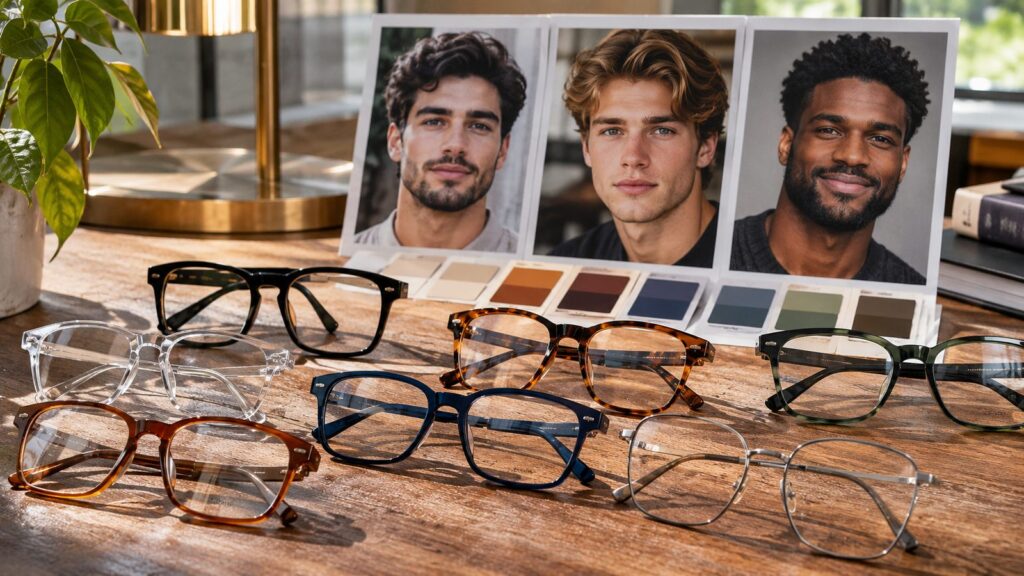
Frame colors influence how your glasses complement your appearance. Consider your skin’s undertone, hair color, and clothing preferences when comparing options. These suggestions are starting points rather than fixed rules.
| Appearance | Colors worth considering |
|---|---|
| Warm skin undertones | Brown, honey, tortoiseshell, bronze, olive |
| Cool skin undertones | Black, silver, charcoal, navy, cool gray |
| Neutral skin undertones | Black, brown, transparent, navy, and mixed tones |
| Dark hair | Black, deep brown, navy, clear, gunmetal |
| Light or blonde hair | Champagne, light brown, silver, transparent |
| Gray or white hair | Charcoal, navy, silver, dark tortoiseshell |
Black and dark brown frames provide noticeable contrast against lighter hair. Transparent and muted frames create a softer appearance. Try several shades under natural lighting before making your decision.
Work Glasses vs. Casual Glasses
Your daily environment can influence which frame design feels appropriate. You may prefer a restrained appearance at work and something more expressive outside office hours, and the fashion articles on Hearvise offer outfit ideas to pair with your frames. One versatile pair can cover both situations if its design suits your routine.
| Setting | Frame suggestions | Practical considerations |
|---|---|---|
| Office and business meetings | Rectangle, slim metal, browline | Comfortable for extended wear and professional settings |
| Remote work | Lightweight acetate, metal, semi-rimless | Comfortable during long working sessions |
| Casual outings | Wayfarer-style, round, aviator | More freedom with shapes and colors |
| Outdoor activities | Secure-fitting nylon or sports-oriented frames | Consider impact-resistant lenses and activity-specific protection |
| Formal occasions | Slim metal, understated acetate, rimless | Choose proportions that complement formal clothing |
If your work involves machinery, tools, or physical hazards, ordinary prescription glasses may not provide adequate protection. Select properly rated protective eyewear for the specific workplace hazard.
Lens Options: What Should You Consider?
Frame selection is only one part of buying prescription glasses. Lens material and coatings affect clarity, comfort, weight, and protection. Ask your eye care professional which options suit your prescription and activities.
Anti-Reflective Coating
Anti-reflective coatings reduce reflections from lens surfaces. They can improve visual comfort around bright lights and screens. They may also make your eyes more visible through your glasses.
Scratch-Resistant Coating
Scratch-resistant coatings help protect lens surfaces against everyday wear. They do not make lenses completely scratch-proof. Clean your glasses with suitable lens cleaner and a microfiber cloth.
Polycarbonate and Trivex Lenses
Polycarbonate and Trivex lenses offer impact resistance and lightweight construction. They are useful options for sports, active routines, and children’s eyewear. For safety-critical activities, choose lenses and frames that meet the applicable protective eyewear standards.
High-Index Lenses
High-index lenses are designed to provide thinner lenses for stronger prescriptions. They can reduce lens thickness and overall weight compared with standard materials. Your optician can recommend an appropriate index based on your prescription and frame choice.
Progressive Lenses
Progressive lenses provide multiple focusing zones within one lens. They help people who need different vision correction for distance, intermediate, and close tasks. Unlike traditional bifocals, they provide a gradual transition between viewing distances.
Photochromic Lenses
Photochromic lenses darken when exposed to suitable ultraviolet light and become clearer indoors. They offer convenience for people who move between indoor and outdoor environments. Their performance varies with lighting conditions, and many do not darken fully behind vehicle windshields.
Are Blue-Light Filtering Glasses Necessary?
Blue-light filtering glasses are marketed to people who spend long periods using computers and smartphones. However, the American Academy of Ophthalmology does not recommend special blue-light-blocking glasses for digital eye strain. Research has not established that ordinary screen exposure damages the human retina or that these glasses reliably relieve digital eye strain. Digital discomfort is often associated with reduced blinking and prolonged near work. Try taking regular breaks using the 20-20-20 approach. Every 20 minutes, look at something at least 20 feet away for 20 seconds. Adjust screen brightness and use artificial tears when dryness becomes uncomfortable. Read the American Academy of Ophthalmology’s guidance on blue-light glasses for further information.
Prescription and Online Buying: What U.S. Buyers Should Know
Before ordering prescription glasses, arrange an up-to-date eye examination with an optometrist or ophthalmologist. Your prescription should reflect your current vision needs. A frame that looks attractive cannot compensate for an incorrect prescription, and the health section on Hearvise covers more everyday wellbeing topics.
Understand Your Prescription Rights
The Federal Trade Commission’s Eyeglass Rule requires prescribers to provide patients with a copy of their eyeglass prescription after a refraction examination. You do not need to request it, and the prescription must be provided without an additional release fee. This allows you to purchase glasses from another seller, including an online retailer. The prescription may be supplied on paper or electronically, subject to the applicable delivery and consent requirements. Read the FTC’s consumer guide to buying prescription glasses to understand your rights.
Check Your Pupillary Distance
Pupillary distance (PD) measures the distance between the centers of your pupils. This measurement helps position the optical centers of prescription lenses correctly. It is especially useful when ordering prescription glasses online. PD is not included on every eyeglass prescription in the United States. Ask your eye care professional or optician to measure it before placing an online order. Some states have specific rules concerning PD measurements and disclosure.
Review the Order Before Checkout
Before completing an online purchase, check these details:
- Your prescription is current and entered correctly.
- The frame measurements match your preferred fit.
- Your pupillary distance is available.
- The lens material suits your prescription and activities.
- The selected coatings meet your everyday needs.
- The retailer explains its fitting, adjustment, and return policies.
If you are unsure about lens compatibility or measurements, consult an optician before ordering.
Frequently Asked Questions
What are the best eyeglasses for men with round faces?
Rectangular and square frames are useful starting points for round faces. Their angular lines create contrast with softer facial features. Browline designs can also provide additional definition.
How do I choose eyeglasses for men with different face shapes?
Start by identifying your face’s overall proportions. Try angular frames for round faces, curved frames for square faces, and several shapes for oval faces. Consider lightweight designs for heart-shaped faces and deeper frames for oblong faces.
Are acetate or metal frames better for everyday use?
Both materials can work well for daily wear. Acetate offers substantial styling and color choices, while metal frames often provide a slimmer appearance. Your comfort, skin sensitivity, and preferred design should guide the decision.
What does 52-18-145 mean on eyeglasses?
These numbers describe lens width, bridge width, and temple length in millimeters. The first number represents a 52 mm lens width, while the second indicates an 18 mm bridge. The final number represents a 145 mm temple arm.
Are blue-light glasses necessary for computer use?
The American Academy of Ophthalmology does not recommend special blue-light glasses for digital eye strain. Regular screen breaks, comfortable viewing distances, and appropriate lighting can help reduce digital discomfort.
Which lens material is suitable for sports?
Polycarbonate and Trivex lenses are lightweight and impact-resistant options. Choose eyewear designed for your specific sport and protection requirements. Regular fashion frames should not replace certified protective eyewear.
Can I order prescription glasses online in the United States?
Yes, you can purchase prescription glasses online using your valid prescription. Check your lens measurements, pupillary distance, and frame dimensions before ordering. The FTC Eyeglass Rule protects your right to receive your prescription from your prescriber.
Final Buying Checklist
Choosing the right pair means balancing appearance, comfort, and vision requirements. Take time to compare frame shapes and materials before making a decision. Use this checklist to review your options:
- Identify your face shape and preferred frame styles.
- Compare frame materials and overall weight.
- Check frame width, bridge width, and temple length.
- Choose colors that complement your appearance.
- Consider your work, hobbies, and daily activities.
- Select suitable lens materials and coatings.
- Obtain a current prescription from an eye care professional.
- Confirm your pupillary distance for online orders.
- Review the retailer’s fitting and return policies.
Your next step: Schedule an eye examination if your prescription needs updating, then compare frames using your measurements and preferred styles. A comfortable, correctly fitted pair should support your daily vision needs while complementing your personal appearance. Editorial health note: This article provides general eyewear information and does not replace an individual eye examination or professional advice. —