
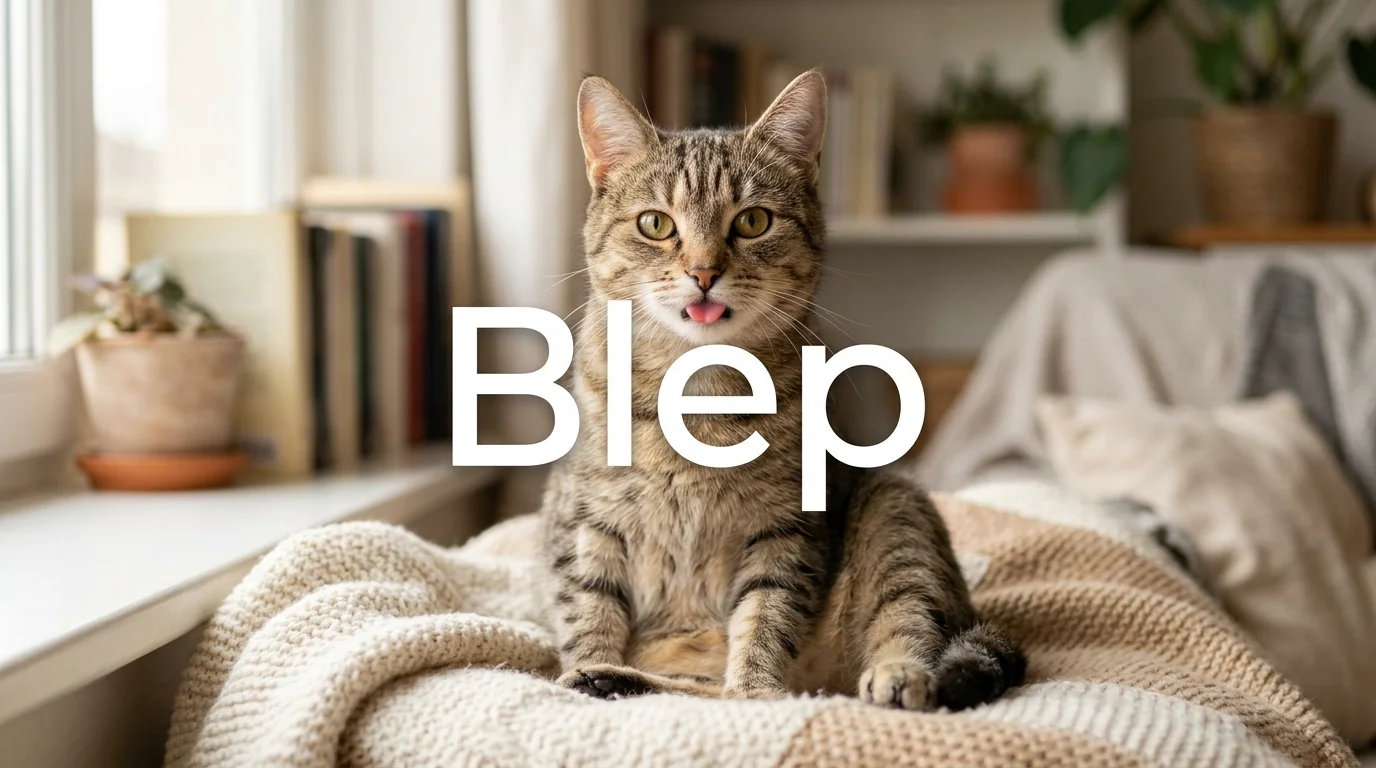
A blep is the small tongue tip you sometimes see resting outside a cat’s or dog’s mouth. The expression became popular through pet photos, memes, and online animal slang. Most cases are harmless, but context matters when the behavior is new or persistent.
This tongue-out expression usually describes a relaxed pet whose tongue tip remains visible without active licking. Cats and dogs may do it after grooming, during sleep, or because of mouth shape. Sudden tongue protrusion with drooling, breathing trouble, weakness, or appetite changes deserves veterinary attention.
| Quick fact | What it means |
|---|---|
| Typical appearance | Only a small part of the tongue is visible |
| Common in | Cats and dogs, especially while resting |
| Usually harmless when | The pet is relaxed, comfortable, and otherwise acting normally |
| Different from a mlem | A mlem usually involves active licking or tongue movement |
| Different from panting | Panting involves repeated open-mouth breathing |
| Call a veterinarian when | The behavior is sudden, persistent, painful, or paired with other symptoms |
Key Takeaways
Most tongue-tip moments are normal when a pet is relaxed and otherwise acting like themselves. Cats may show the behavior after grooming or sleep, while dogs can show it while resting. New symptoms, breathing changes, heavy drooling, pain, collapse, or poisoning concerns need veterinary attention.
What Does Blep Mean?
The term describes an animal leaving a small part of its tongue outside the mouth. It is informal internet slang rather than a veterinary diagnosis. Dictionary sources commonly associate the word with cats and dogs whose tongues appear to rest outside their lips.
The key detail is that the tongue usually looks still and unintentional. There is no obvious licking motion or repeated open-mouth breathing. That distinction separates the expression from several other normal tongue behaviors.
Why Cats Sometimes Leave Their Tongues Out
Cats can leave their tongue tips visible after grooming because the tongue was already outside the mouth. A relaxed jaw may also let the tongue remain slightly forward. This is especially easy to notice when a cat is sleepy or deeply comfortable.
Mouth shape can matter, especially when teeth are missing or oral anatomy provides less support for the tongue. Veterinary-reviewed sources also list dental pain, nausea, and oral disease among possible causes. A new pattern deserves more attention than an occasional familiar habit.
Flat-faced cats can make tongue position more noticeable because their facial anatomy differs from longer-faced cats. Owners of breeds such as Himalayans may already watch facial and dental care closely. Hearvise’s guide provides more background on Himalayan cat care for U.S. owners.
Why Dogs Can Show the Same Tongue-Tip Expression
Dogs can also leave a small tongue tip visible while resting or sleeping. The behavior may look almost identical to the version commonly photographed in cats. A calm dog with normal breathing and behavior is usually less concerning than a dog showing sudden changes.
Do not confuse a resting tongue tip with panting. Dogs pant to regulate body temperature, and panting involves repeated breathing with the mouth open. PetMD and the American Kennel Club note that excessive or unexplained panting can signal heat, pain, stress, or illness.
Dogs use their mouths for many social and sensory behaviors, so context matters. Licking, panting, yawning, and tongue resting can look similar in a single photo. Hearvise’s guide to why dogs lick faces explains how timing and body language help interpret mouth-related behavior.
Tongue-Out Slang vs. Mlem and Panting
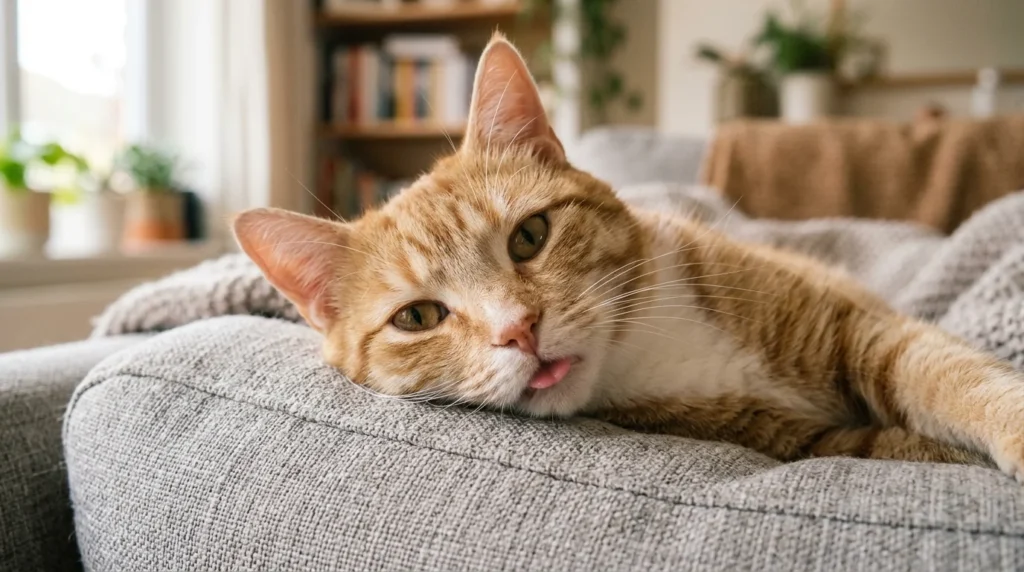
Online pet language can sound precise, but people do not always use these words consistently. The most useful distinction focuses on what the tongue is doing. A still tongue tip, an active lick, and rapid open-mouth breathing describe different behaviors.
| Behavior | What you usually see | What it often suggests |
|---|---|---|
| Resting tongue tip | Small tongue portion stays outside the lips | Relaxation, grooming pause, anatomy, or habit |
| Mlem | Tongue moves outward and back | Active licking, tasting, grooming, or licking the nose |
| Panting | Open mouth with repeated faster breaths | Cooling, exertion, excitement, stress, pain, or illness |
| Flehmen response | Mouth partly open with a distinctive facial posture | Scent processing rather than a simple resting tongue |
This comparison is more useful than relying on meme labels alone. Pet owners should watch breathing, posture, appetite, energy, and repetition. Those clues can show whether the moment is ordinary or worth discussing with a veterinarian.
When a Tongue Sticking Out Is Usually Normal
Occasional tongue protrusion is often harmless when your pet looks comfortable and behaves normally. It may happen during sleep, after grooming, or during quiet rest. The tongue should return to its usual position without obvious distress.
A familiar pattern is also less concerning than a sudden change. Some pets naturally show more tongue because of face shape, missing teeth, or relaxed jaw position. Regular wellness visits can help you understand what is normal for your individual pet.
Take a quick photo if the behavior keeps happening. A photo can help your veterinarian see the exact tongue position and facial posture. It also gives you a useful comparison if the pattern changes over time.
Warning Signs That Deserve Veterinary Attention
Persistent tongue protrusion can sometimes accompany dental disease, mouth pain, nausea, or other medical problems. Watch for bad breath, pawing at the mouth, reduced appetite, vomiting, or unusual drooling. Veterinary-reviewed cat sources flag these combinations as reasons to evaluate more closely.
Breathing changes need faster attention. Cats should not develop unexplained open-mouth panting at rest, and PetMD advises prompt veterinary care for this pattern. Dogs also need urgent help when heavy panting is accompanied by weakness, collapse, abnormal gum color, or worsening breathing.
Possible toxin exposure is another reason to act quickly. Some toxic plants can cause mouth irritation, tongue swelling, vomiting, and heavy drooling in cats or dogs. If poisoning is possible, contact a veterinarian or the U.S. Animal Poison Control Center promptly.
Hearvise also covers the role of veterinary hospitals in emergency and critical care. That resource explains why breathing trouble, poisoning, or collapse needs rapid assessment. These signs are different from a relaxed pet quietly showing a tongue tip.
A Simple Five-Step Check for Pet Owners
- Look at breathing. Normal quiet breathing is reassuring, while labored or rapid breathing changes the situation.
- Check behavior. Notice whether your pet is relaxed, restless, hiding, weak, or unusually tired.
- Look for mouth signs. Watch for drooling, bad breath, swelling, bleeding, or trouble eating.
- Think about timing. Ask whether the behavior followed sleep, grooming, heat, exercise, medication, or possible toxin exposure.
- Track the pattern. Note whether it is occasional, becoming frequent, or completely new for your pet.
This quick check does not replace a veterinary examination. It helps you organize what you are seeing before you call. Clear observations can make the conversation with your veterinarian more useful.
Pets with ongoing medical conditions may need a lower threshold for evaluation. New mouth or breathing changes can matter more when another illness is already present. Hearvise’s guide to managing chronic conditions through veterinary care explains why you should monitor changes consistently.
Why the Expression Became Internet Slang
Pet communities have created a playful vocabulary for small animal behaviors. Dictionary.com traces the term through DoggoLingo and social media, where tongue-out photos became easy to label and share. The word now appears across cat, dog, and general pet content.
The humor works because the expression looks accidental. A tiny visible tongue can make an otherwise serious-looking animal seem unexpectedly silly. That visual contrast helped the term spread far beyond its earliest online communities.
Frequently Asked Questions
Is a blep the same as panting?
No, these behaviors look and function differently. Panting involves repeated open-mouth breathing and is especially common in warm or active dogs. A resting tongue tip can appear without any change in breathing.
Why does my cat leave its tongue out while sleeping?
Sleep relaxes the jaw and facial muscles. That relaxation can let a small part of the tongue slip forward. The behavior is usually less concerning when your cat wakes normally and shows no other symptoms.
Why does my dog’s tongue stick out when resting?
A dog may relax enough for the tongue tip to stay outside the lips. Mouth shape, missing teeth, or habit can also affect resting tongue position. Watch for breathing changes, drooling, pain, or a sudden increase in frequency.
What is the difference between a mlem and a resting tongue tip?
A mlem usually describes an active lick or quick tongue movement. A resting tongue tip stays visible without obvious licking. Internet usage varies, so behavior matters more than the label.
Should I call a veterinarian if this starts suddenly?
A sudden change is worth watching more closely. Call your veterinarian if it persists or accompanies drooling, appetite loss, vomiting, mouth pain, or breathing changes. Seek urgent care for breathing difficulty, collapse, severe weakness, or suspected poisoning.
The Bottom Line for U.S. Pet Owners
A small resting tongue tip is usually a funny, harmless moment, not a problem. The safest approach is to judge the whole pet, not one facial expression. Breathing, appetite, comfort, energy, and sudden changes provide better clues.
Save a photo when the behavior looks unusual, then compare it with your pet’s normal appearance. Contact your regular veterinarian when the pattern is new or persistent. Use emergency veterinary care when serious breathing, poisoning, or collapse signs appear.